
Windows supports VLC skins
Use the desktop VLC build and a trusted .vlt skin file. Keep the native interface as the recovery path.
VLC skins are supported on Windows and Linux, not the native macOS interface. Place a trusted .vlt file in the documented skins folder, select the skinnable interface, then restart VLC.
VLC’s skinnable interface is a separate desktop interface. The official VLC 3.0 documentation supports it on Windows and Linux, while the native macOS interface does not support VLC skins.
Use the desktop VLC build and a trusted .vlt skin file. Keep the native interface as the recovery path.
VLC documents the user skin directory as ~/.local/share/vlc/skins2. Package layouts can still differ.
Do not install wrappers that claim to add VLC skin support to the native Mac interface.
These archived screenshots show the VLC 3 desktop interface on Windows. Menu wording can move between releases, but the decision remains the same: open Preferences, choose the custom-skin option, select a .vlt file, save, and restart VLC.
Start in VLC’s normal desktop interface. Do not open an executable supplied by a skin download.
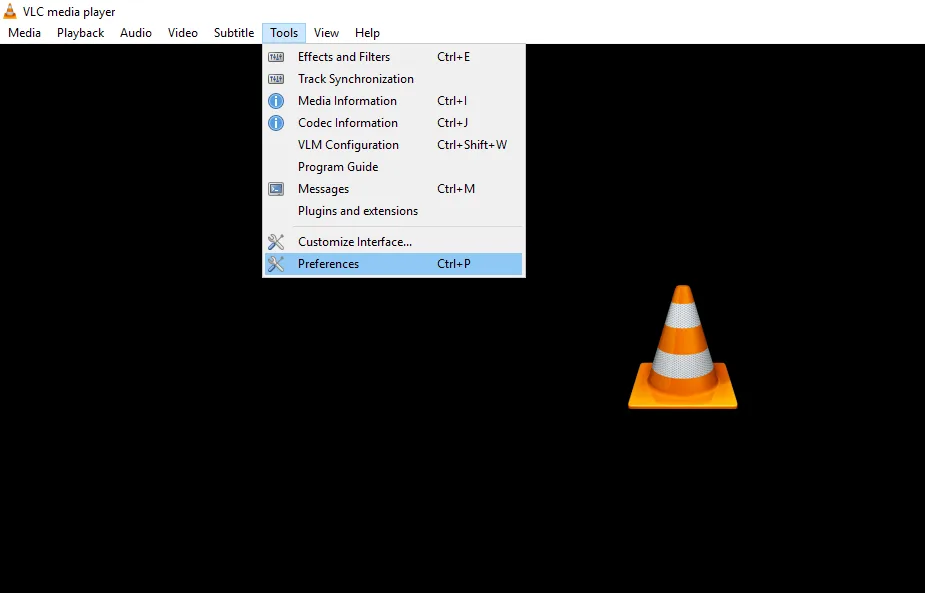
Stay on the Interface preferences page. The custom-skin option switches VLC away from the native desktop controls after restart.
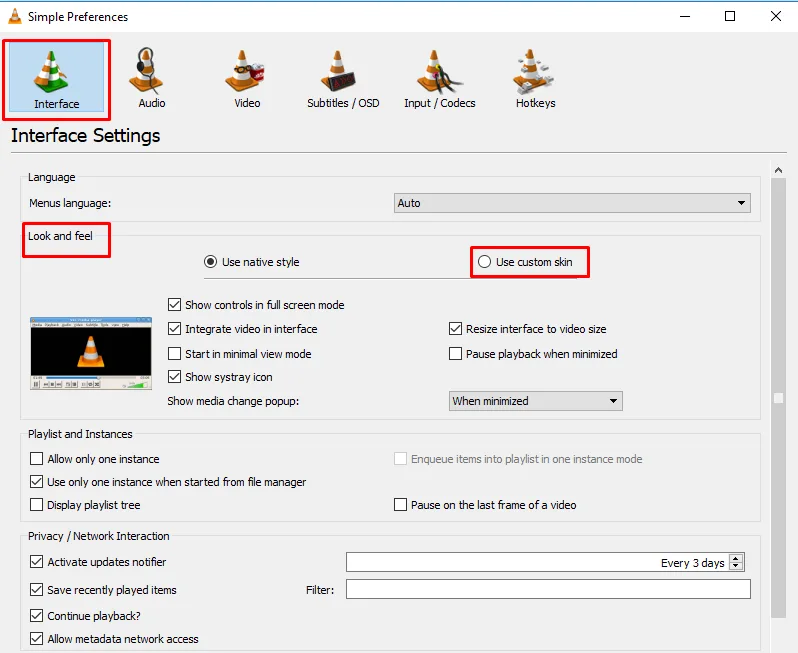
Choose the downloaded .vlt file, save the preference, close VLC completely, and reopen it. VLC’s documentation says a restart is required.
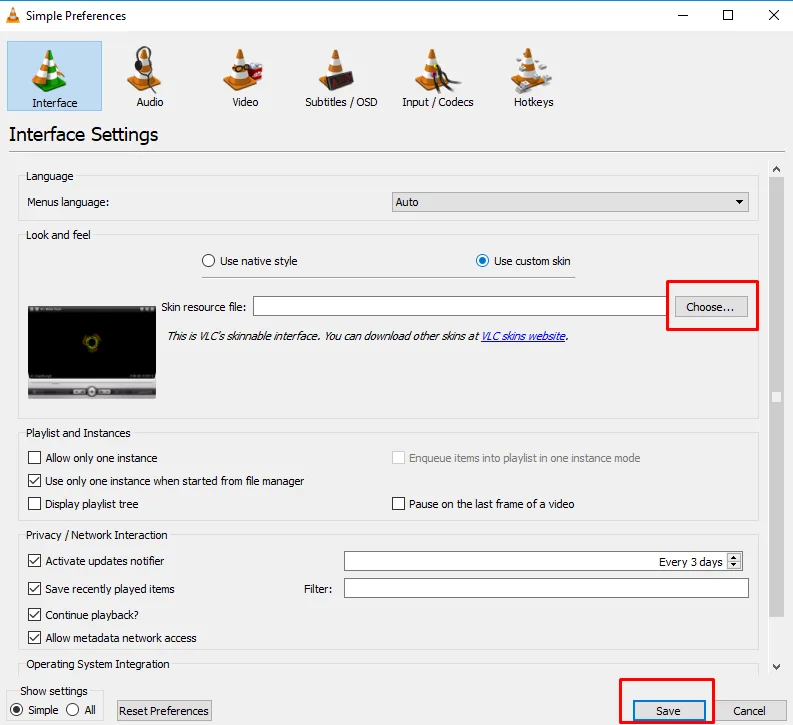
Return to Tools > Preferences > Interface, select Use native style, save, and restart VLC. If the skin hides controls, close VLC and move the selected .vlt file out of the skins directory before reopening the player.
A VLC skin is a .vlt package. If a download asks you to run an installer, disable antivirus, or grant administrator access, stop and follow the VLC add-on safety checklist.
.vlt filename so removal is easy.No. VideoLAN's VLC 3.0 desktop documentation says skins are supported on Windows and Linux or Unix, but not on the native macOS interface.
VLC requires a restart after choosing a custom skin. Confirm that you selected a .vlt file, saved the Interface preference, and closed every VLC window before reopening the player.
The compatibility, folders and restart steps above follow VideoLAN’s VLC 3.0 desktop documentation. Screenshots are preserved from the earlier VLC.ONL guide and show the Windows desktop interface; they are examples, not proof that every current build uses identical labels.
VideoLAN skin documentation >Official VLC Skin Editor >